68.3%
make assumptions about others based on age.
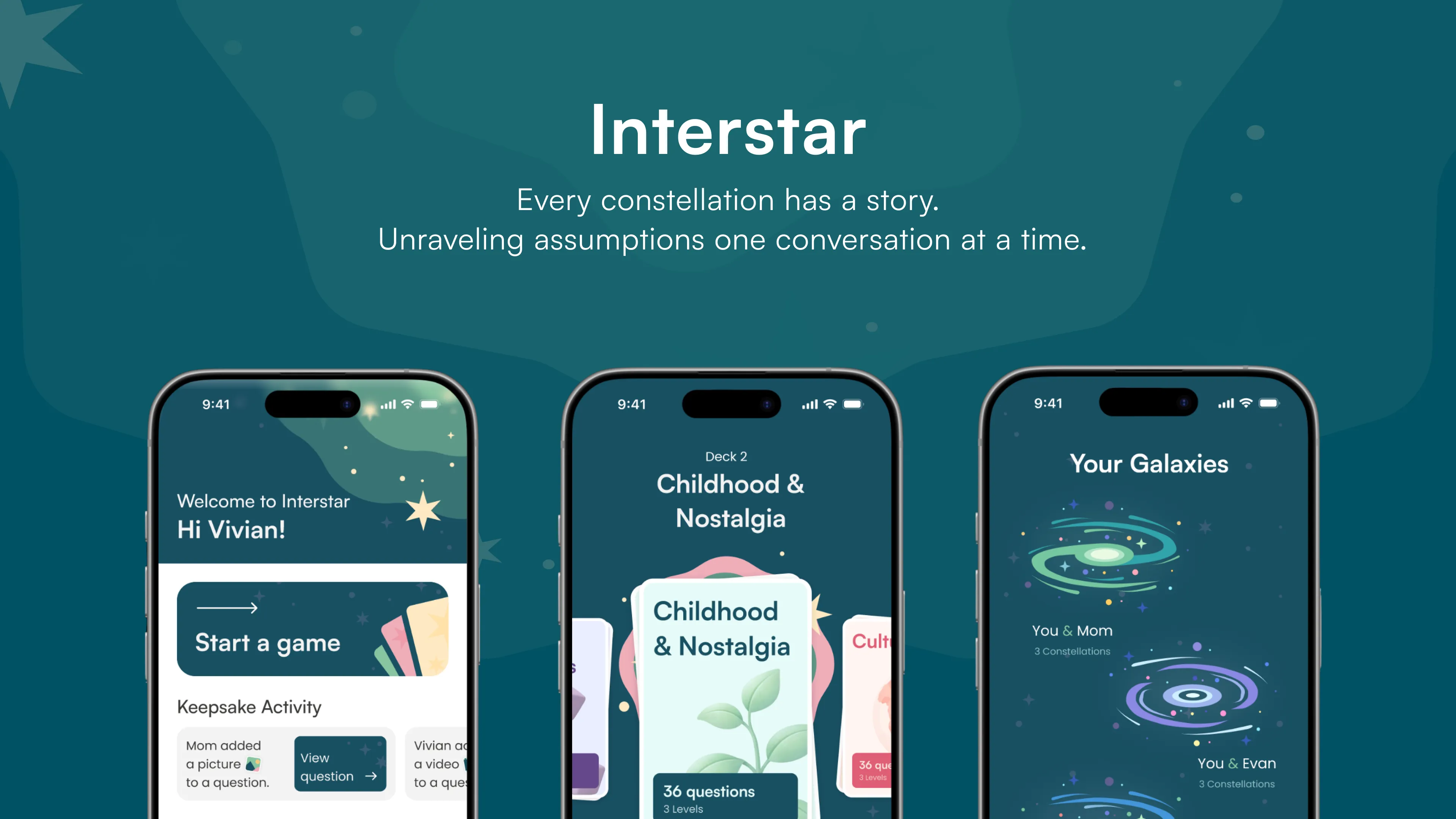
Context
Interstar was created for Rice Design-a-thon 2026 around a broad social problem: multiple generations live side by side, yet often feel misunderstood by one another.
The final concept is a guided card-game experience inspired by constellations as a way of passing down meaning. Each prompt becomes a star, and each round builds a shared constellation of stories, memories, and values.
The Challenge
Conversations between parents, children, grandparents, and peers can be shaped by assumptions, unspoken expectations, and emotional distance. The problem was not that people lacked stories; it was that they lacked a safe structure for reaching them.
How might we design a safe, intentional way for people to understand one another across generations without confrontation, pressure, or blame?
Research
We surveyed 60 people across different generations to understand how often age-based assumptions happen, what they cause, and whether storytelling could make sensitive conversations easier to enter.
68.3%
make assumptions about others based on age.
80%
experience frustration or tension from cross-generational assumptions.
96.7%
strongly agree that personal stories help generations understand each other.
86.7%
prefer face-to-face communication for sensitive topics.
The strongest opportunity came from a tension in the data: assumptions were causing harm, but people were still open to talking about them. Around 90% of respondents were comfortable or neutral about responding to an assumption when it was presented as a guess.
That shifted the design direction from "erase stereotypes" to "create a safer moment to inspect them." Interstar uses the awkward first guess as a doorway into the story behind it.
Solution
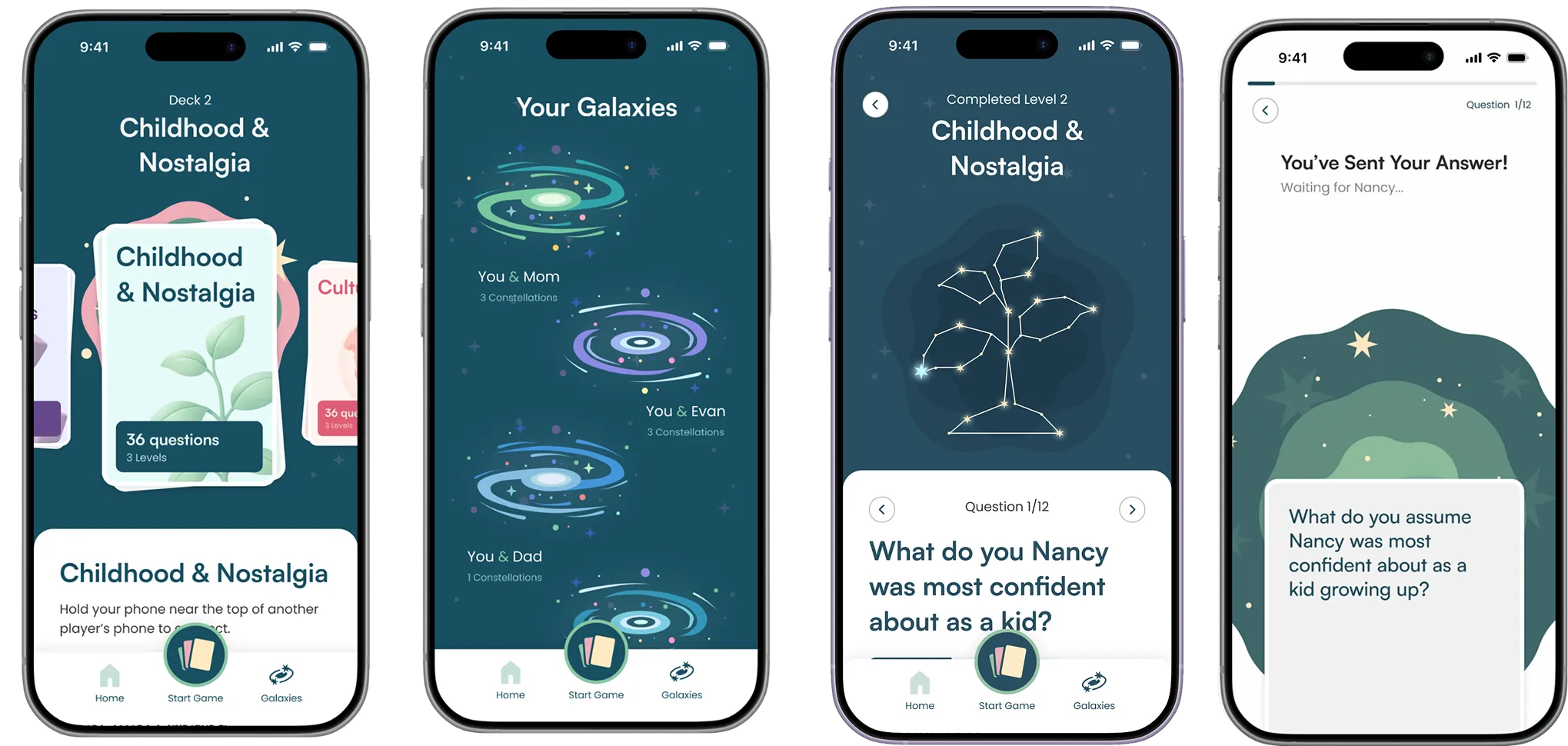
Interstar is structured around perspective-taking and reciprocal storytelling. Players respond to prompts by guessing something about another player's experiences, values, or memories, then talk through the real story together.
01
Each card opens with a question about everyday life, memory, values, or relationships.
02
The guess makes an assumption visible without framing it as a fixed judgment.
03
Players discuss what was right, what was missing, and where the assumption came from.
04
Every answered prompt becomes another star in a shared record of the conversation.
Visual Direction
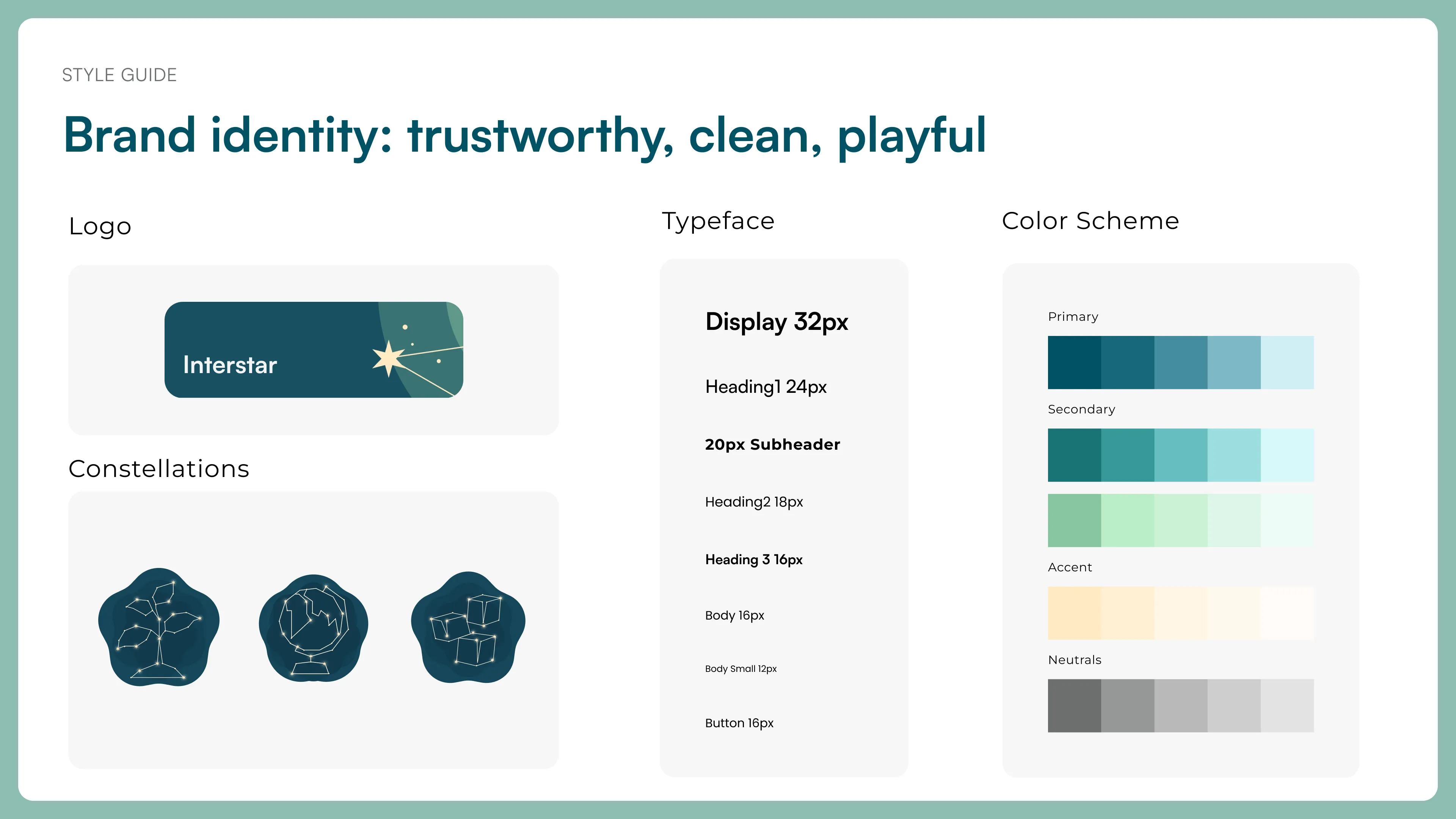
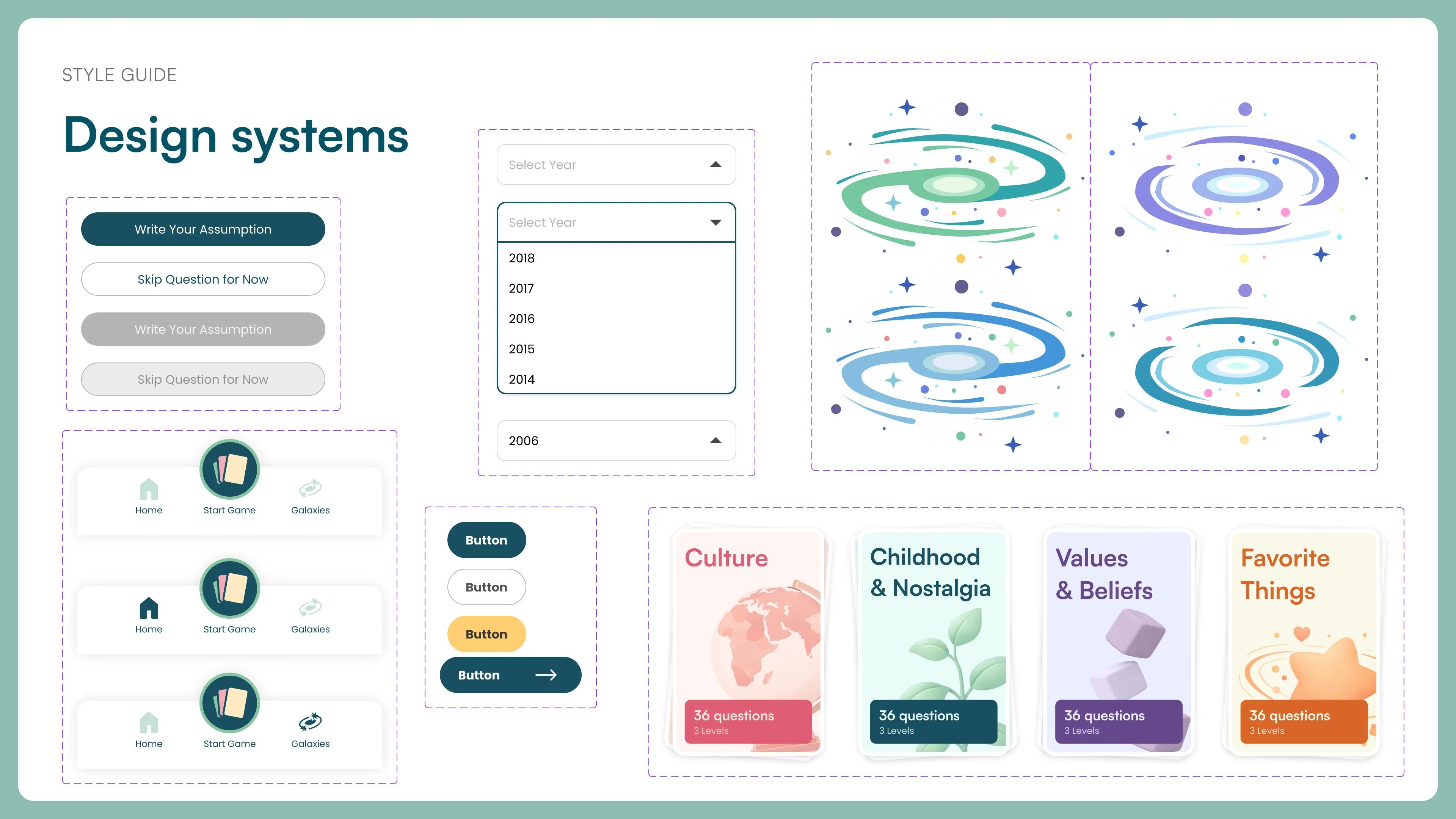
For the visual exploration, we used AI image generation alongside vector drawing in Figma to create the graphics. The more complex constellation-map direction looked beautiful, but it started competing with the card text and felt too dense for our accessibility goals.
The final direction became quieter: single glowing stars, soft light rays, high contrast, and minimal compositions. The visual system supports the emotional tone of the game without distracting from the conversation.
Design Decisions
Face-to-face by default: Because sensitive conversations rely on tone, eye contact, and body language, the game is designed for people sitting together instead of connecting through a remote-only screen.
Assumptions reframed as guesses: Players are invited to make a thoughtful guess, then talk through what was accurate, what was not, and what shaped that assumption in the first place.
Mutual participation: Both players guess and both players tell stories, so the interaction does not become one generation explaining itself to another.
Accessible interaction details: The prototype prioritizes simple sans serif type, larger readable text, high contrast, and read-aloud support for a multi-generational audience.
Reflection
The biggest design lesson was that an uncomfortable interaction does not always need to be removed. Sometimes the better product move is to soften its edges, slow it down, and give people language for moving through it.
If we continued the project, I would test the prompt order with mixed-age groups, tune how quickly questions move from light to vulnerable, and validate the read-aloud and type-size decisions with older players.